
Interview - Bic Runga - 6th March 2026
Bic Runga - photo credit Tom Grut
In the three decades since she captivated audiences with her single Drive, the first track from her debut album of the same name, Bic Runga has not only become a national treasure, she is a bonafide icon of New Zealand music. From Sway to Get Some Sleep to Listening For The Weather to Hello Hello, Runga has penned multiple songs that have captured the attention - and hearts - of a legion of fans around the world. 15 years after the release of her last album Belle, Runga returned to the studio in 2025 to record a new collection of material. Recorded in Paris during the winter, Red Sunset, Runga’s sixth solo album, is one founded upon reflection and introspection, paradoxically drawing inspiration from the past, while introducing a new facet to her songwriting that captures atmospheric vibes of Paris in winter.
In support of the release of Red Sunset, Runga is heading out on tour, performing shows in Hamilton, Auckland, Christchurch and Wellington (with the NZ Symphony Orchestra) before heading to Australia for another five shows. Bridget Herlihy had the pleasure of talking to Bic Runga about the evolution of Red Sunset and her approach to songwriting.
Interview By: Bridget Herlihy
Interviewee: Bic Runga
Date: 6th March 2026
Bic Runga - Red Sunset
Huge congratulations on the release of Red Sunset! You have a busy schedule, heading out soon to perform the album live around New Zealand, followed by some dates in Australia. Whereabouts are you at the moment?
Just at home. This is my home studio. It's just a single bedroom, but it's really functional, actually. It's quite a good way to work. If we had a studio outside of the house, we'd never get to it. The kids are only just able to tend to themselves now. So you can have a separate workplace.
You have just released your sixth solo album, and looking back over your career, you have done so many wonderful things over the last three decades. I used to watch you on Music Nation in the ‘90s, and I never missed it. That was around about that time your first album came out, which was a groundbreaking album. I just realised that next year is 30 years since Drive was released.
Oh, that's cool. Yeah. Crazy! I loved Music Nation, because it was actually Karen Hay that produced it. When she had her show, I was like you — I would watch her show religiously. When something new came out, you'd get excited about it. It's just not like that now. It's like, there's so much distraction, such sort of like a low attention span. It's really different. Those music television days were fun. We just tuned in and everything was quite deliberate.
I recently read a quote that said that you have a voice that is woven into the soundtrack of Kiwi life and that Drive changed the face of New Zealand pop. Looking back on three decades of your career and everything that you've accomplished, do you at times experience a sense of awe?
Not remotely. I'm, like, such a goober sometimes. I don't know. I feel a lot. Most days I feel kind of like a failure, but I don't really care. I've just sort of put one foot in front of the other and show up to stuff. There's a funny Keith Richards quote — so much of it is just showing up and then sort of winging it. But I never really feel like I have even remotely achieved what I want to do. And then probably my biggest achievement is just being here at all. You know, it surprises me that I'm still doing it, because some days I probably thought that it was all over. But it's not. It's just whatever you want to put your energy into.
Do you think that it is like imposter syndrome?
It's not imposter syndrome — because I know what you mean. But I was never trying to be anyone else. I'm really aware that I'm me, you know? I don't feel like I fit any particular box anywhere; I've always just had a really good sense of who I am. So in that sense, no, I don't feel like an imposter or like I'm trying to imitate something or that. And then also you realise that the so-called powers that be, they're just as inept and just as prone to mistakes as the next — you know, as is anyone. I think that's the real vibe I'm feeling, is that nobody's quite got this.
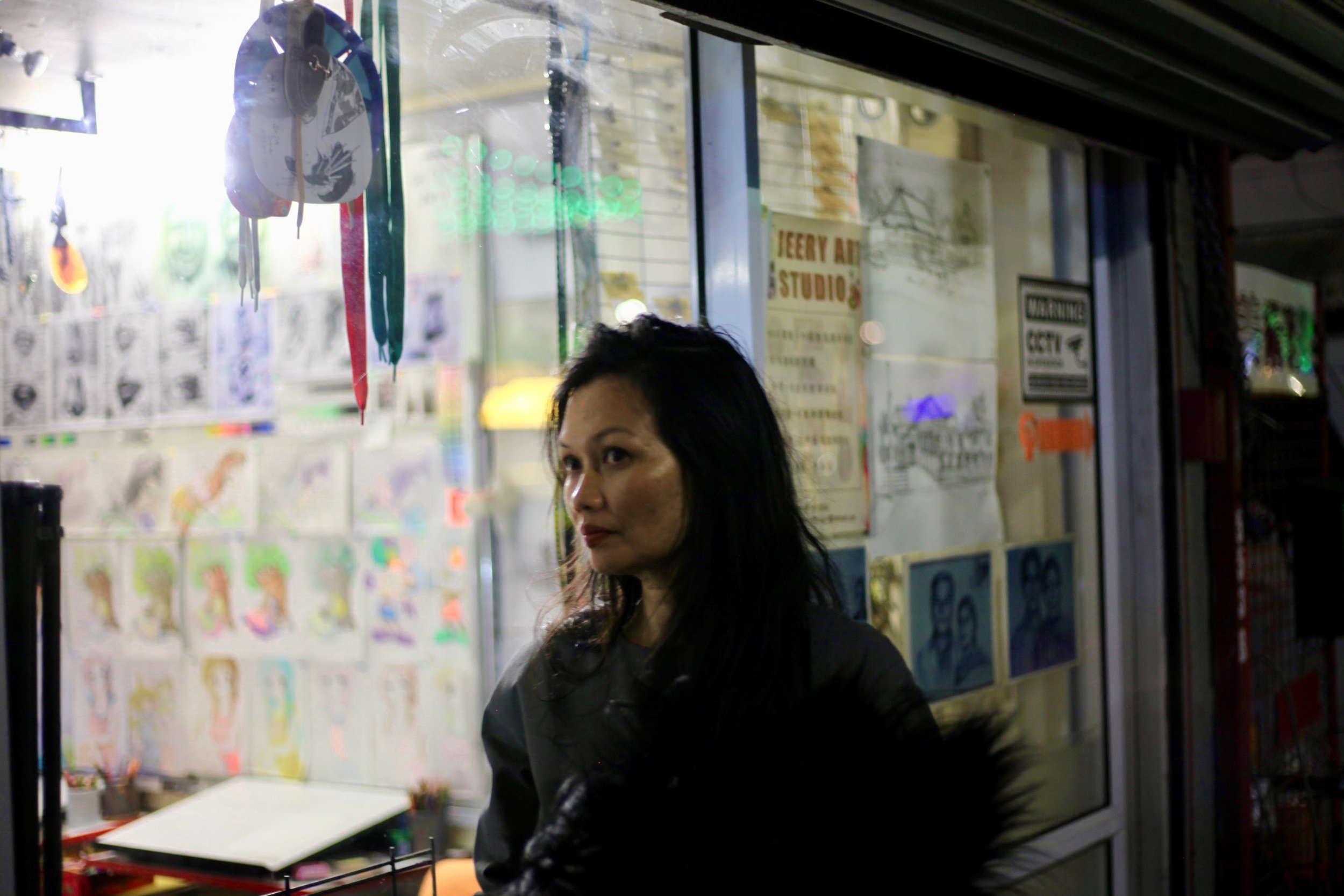
Photo Credit - Aileen Chen
Congratulations on the release of Red Sunset. It is an exquisitely beautiful album.
Thank you. I was listening to it this morning, and I was thinking, you know, it depends on how much coffee I've had or what sort of mood I'm in. But sometimes I'm like, is anyone going to listen to this? Is this just, like, painfully slow and depressing or, like, you know what I mean? It all depends on what sort of frequency you're buzzing at, at any given time, whether it sort of hits you in the right way. So you can't control it, you know? It's like, some days it might sound better at certain times of the day or… I don't know. You can't control what happens to it. It's a really weird feeling. Every listener is going to be different.
You chose to record the album in Paris. How did that come about?
Yeah. I took the family too. I had a business meeting to go to. I'm on this ExCo for an international arts organisation that represents composers, and it's based in France, which is like almost a crazy dream that I must have manifested for myself. Because I used to live in Paris for a little while when I was about 27. I think in my deepest dream, I was thinking, ‘How do I get to visit this place in a legit kind of way rather than just sort of like a tourist?’ It's pretty cool to sort of represent artists and be in that mix, but also still be able to make music. And so I had my first meeting for CIAM (International Council of Music Creators), which represents composers, but I brought the kids because this is like a dream — like I'm living a dream in that respect. To see Paris after so many years, because I only maybe went back once since I've lived there, and the kids had never seen it. It was cool. I guess I just wanted to get out of my mundane existence of loading the dishwasher and loading the washing machine. I’ve just felt so domestic for so long. And so I was just like, how do I make music if my existence is just this?
How long did you spend writing and recording the album?
I don't actually know. It's funny when you decide and you have the resolve to do something; things can happen really quickly. Because, to be fair, I've been bumbling around and navel gazing for 15 years thinking to myself, ‘Am I ever going to actually make a new album again?’ But I think when that CM role came about, maybe it gave me some confidence. Then I realised that even little fragments of songs that I had kicking around 20 years ago were worth finishing. I think maybe that's just a confidence thing. You think that maybe you don't have the skill set to complete something and control its completion. But now I cherish all those little ideas that I probably didn't respect enough, and I've got a bit more ability to finish them properly.
You appear to have had the creative freedom and flexibility to just let things develop organically. You've had the ability to decide when you are ready to create new work.
From an industry point of view, I'm completely unbankable. Do you know what I mean? Like, that's the thing. I have not been in a contract for such a long time. So no, I was not beholden to anyone to deliver anything. So this [album] is completely independent. In a way, it's a driving force to know that nobody was expecting a record from me, and no one thinks it's going to make anybody any money. So it's not that appealing from a business point of view. So if I want to do it, I have to do it. But if I want to do it, I have to do it for all the right reasons.
You and Kody (Neilson) worked together quite closely on this album.
Yeah, we produced it together. We actually play all the instruments together on it; that's us playing everything. There's one other person playing a bass part, but that's it. And that was sort of part of it as well — keeping it in the family and just doing what we could with what we had.
That's a beautiful and very organic or grassroots way to go about the process, and I think that comes through in the album. It's a very honest album. I almost get a sense of melancholy from it. You mentioned going back to material that you were working on a number of years ago, but were there any particular influences that really impacted the sound on the album, or did it develop in that organic manner?
Yeah. Sonically we didn't have the right gear that we needed for maybe the last 10 years or so. But we suddenly realised that we need to kind of invest in ourselves, you know what I mean? When you put yourself second to the kids for a long time, it's easy to just wear the same old thing and not really invest in yourself and your development. But we just actually bit the bullet and bought the equipment we needed. And then it was just sort of easy after that, because everything sounded better. Everything sounded of warmer and sizzlier. I think my voice is sort of gentle, and if [the recording] is all digital, it's just so weak and thin. This record is pretty mellow in parts, but it's got sort of like an opaque sort of sizzly analogue depth.
You have got four shows coming up in New Zealand, including a show in Wellington with the Symphony Orchestra. How are you working with the orchestra to add an additional sonic dimension to Red Sunset?
We had a lot of old arrangements, already, of all the back catalogue songs — you know, Sway and Drive —and we've already got a lot of the songs sorted out. But we've had to commission a whole lot of new arrangements for the new album. We're probably including about half the new record in the show. It's amazing working with an orchestra. You have to work really efficiently; they're like a well-oiled machine, and I love that. You don't get time for it to fail. It's just always so efficiently run.
Do you find it at all daunting working with an orchestra?
I think the first time I might have found it hard, but I'm used to it now, and I just trust them. They know what they're doing, and it's so good. It's like working with anyone that's exceptionally professional. You've got a lot of trust in it.
There is one song on Red Sunset, Paris in the Rain, where you played an 1807 French Pleyal piano. How did that come about?
It was just in the house that we rented. It just had so much of a vibe, and a lot of the record sort of sounds kind of electronic, but it's actually an analogue. [It was] a real old piano that just had a lot of atmosphere. It was Paris in the Rain because Paris had been flooding a few months earlier before we came. And this whole flooding business is new, isn't it? It was sort of funny to see Paris again after 25 years, but there's this kind of slightly apocalyptic vibe in the world. So I was trying to capture that weird feeling that I felt walking around Paris that night in the winter.
Congratulations again on the release of Red Sunset, Bic. It is indeed an exquisite album. You should be so proud of what you've produced, and you truly are an inspiration for everything that you've accomplished. All the very best for the New Zealand and Australian legs of the tour. I’m looking forward to seeing you perform live again.
I really appreciate that. That's very cool. Thank you.

Bic Runga - Red Sunset Tour 2026






Avenged Sevenfold
AU/NZ Tour 2026
Friday 23rd October- Spark Arena - Auckland
with Special Guests Coheed and Cambria & Thornhill