
Interview - Ali Whitton - 12th June 2026
Photo Credit - Emily Raftery
Interview By: Bridget Herlihy
Interviewee: Ali Whitton
Date: 12th June 2026
Photo Credit - Emily Raftery
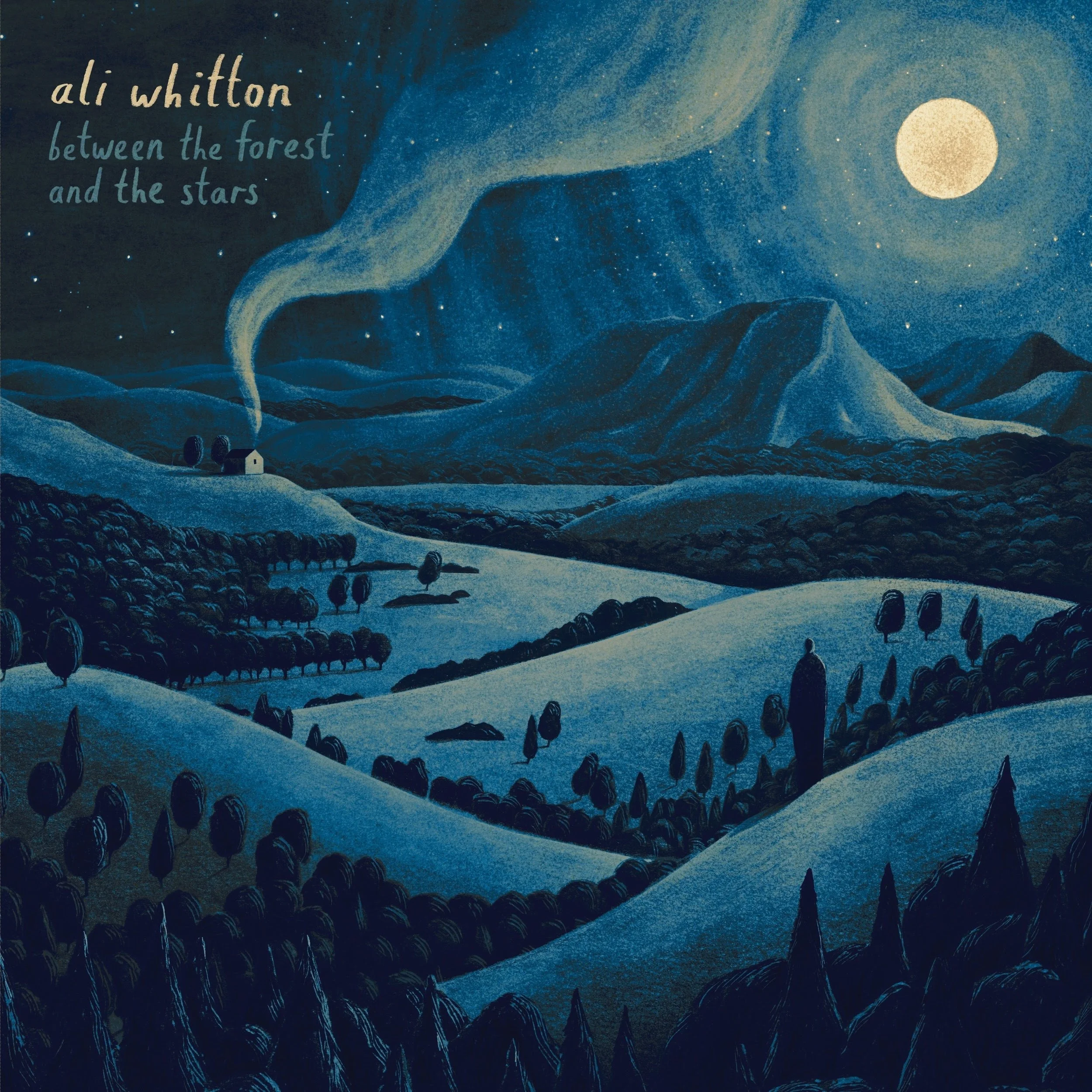
Wellington-based indie-folk singer-songwriter Ali Whitton recently released his beautiful debut album, Between the Forest and the Stars; his first album under his own name since stepping out from behind his former musical moniker Little Bird. Co-produced by Reb Fountain and Dave Khan, the evolution of the album was founded in a challenge from an old friend and peer — namely Ed Sheeran — who encouraged Ali to return to music after a tumultuous experience while living overseas. Tasked with the task of writing a song a week for a year, the foundations of the album emerged and continued to be honed in the studio with Reb and Dave in the lead-up to the recording of the album. I had the chance to chat with Ali about his musical career and how Aotearoa has provided him with a renewed love of music and the opportunity to create an exquisite collection of songs.
Congratulations on the release of Between the Forest and the Stars.
Yeah, it’s exciting, but it's also like project fatigue. But, yeah, I'm super-excited.
You are originally from New Zealand, but grew up in the UK; how long have you been back in New Zealand for?
Yeah, I’ve been back 16 years. I was totally randomly New-Zealand-born - British parents and the least likely people to ever be working on the other side of the world, but they just happened to be. I was born here, and then moved back [to the UK] within a year. I grew up in the UK and never thought anything of it until my mid-to-late 20s, when a bunch of small life disasters happened and I just thought I'd like a fresh start. It was sort of laziness because I could get the passport.
I'm calling this album my debut album, and I suppose it is, under [the name] Ali Whitton. But I had a bad second-album experience in the UK, and then it was all swirling. There was a break-up in the middle of that as well; I was 27, and I was just, like, ‘I'll just cash in my chips here and go’. I sold everything. I took my guitar and suitcase, and then came on a one-way ticket, and I basically put loads of pressure on myself to do music as a young man. I'm one of those people who have been later diagnosed with ADHD, so I didn't know that I had burnout, but it was a burnout, basically.
When you say you had a bad second album, what happened to make it a less-than-desirable experience?
It's been so many years; I used to not be able to talk about it without tears. But it's all fine now. I used to play with a seven-piece band in the UK, and I made a record, my first record with a producer, and so it was tidy and objective. And then for the second record, I actually moved to London and started playing solo in France and coming and going across to play lots of shows in France, kind of organically. They really liked what I was doing, so I went across often. So I was, like, “I really should make a second album now”. I got the old band back together to help me, and that was, like, a seven-piece band, and I just recorded it myself. I was mixing tracks when I was not skilled enough to do that and trying to self-produce an album and basically working 10 hours a day at my day job, and then mixing the tracks in the evening until 11 at night or whatever and recording.
I made the record in time for a French tour, and sent it off to be made into CDs. The long story short is the courier lost half of the run, and the CD company said, “No, we can't make them in time for the tour”, even though I'd given it, like, six months early. Then I had to go on the French tour without it. When I came home, the courier had lost half the run of the CDs, and when the other half arrived, I was, like, “Well, this is my second album. I'm so stoked”! I opened the box, and it was rattling; they had smashed them all. And that was in the run-up to Christmas. I was just on the tour, and I had felt really lonely, and it was long gigs and strange different places, and I started losing confidence without knowing I'd ever had confidence. I didn't know I had confidence until I lost it. When I was a younger singer, I was just kind of on that trajectory of “I do this and people like it”, and I kept doing it. And then I was, like, “Hang on. I don't like the sound of my voice”. I started not liking how I was sounding. I was playing long shows in France that were sometimes two hours long, and I was kind of getting bored of myself. I don't know. I think I was just a bit mixed up.
Did you end up taking a hiatus after the tour and releasing your second album?
Yeah. Initially, I thought, “I'll write a few more songs. Everything will be OK”. And then it wasn't. So then I packed up and went to New Zealand, and I wasn’t playing music any more. Then I got into the New Zealand lifestyle here for a couple of years, and then started writing again and playing under the name Lost Bird because I was a big Bright Eyes fan. I only ever got a fiddle player, and we played as a duo for a few years, and then made a couple of songs. Then I had a bunch of health problems, like chronic fatigue syndrome after glandular fever. That wrecked me for three years, and basically stopped playing for that time. So there's been patches of doing less of it. And then one of the important things for me in New Zealand was once I did get back into it was to take the pressure off.
About three years ago this challenge from an old mate to write some songs happened, so it has been a bit more pressure than I'm used to. The last three years, I've been working harder on it. At the time I didn't realise how hard it was; I've tried to do it since, when there's less of a goal..
When you say an old mate, was this was this the challenge given to you by Ed Sheeran?
Yes. I met him when he was 16. We played together at some gigs in London; he was nobody, and I was nobody. He was always very talented. We did a little tour with one of the promoters that we used to play for, who took us up to Edinburgh Festival, and we performed up and down the country on the way. That was with about 10 other singer songwriters. But Ed and I and one other were more closely aligned in the way we were writing and what we were doing, and we were good friends. When I sort of quit it all in 2010 and came here, a year later I heard him on the radio, and I was, like, “Oh, that's my mate”! And now he sells out stadiums and everyone knows who he is.
Did you have the opportunity to catch up with him when he came to New Zealand earlier this year?
Yes, my son and I popped up to Auckland and caught up with him. I gave him some copies of the LP, which was lovely. I love what he did, because he sort of triggered me to find something in myself again. Like, the older we get… You know how sometimes songs don't hit as hard as they did when you hear a new song? I've always been searching for that, and I thought with my own music I wasn’t getting that. I just thought I was jaded, and then he said it was like he heard a part of a song and said, “You should record that, and I've got a deal for you. Write a song a week for a year, and I'll help you”. And all of a sudden, I was looking at the world differently. I suddenly realised I was like… Have you ever seen The Land Before Time? That moment when they climb over the hill, and then they just see the valley — that's what learning music felt like. I was, like, “Ooh, look at all of the things I could learn!” I suddenly realised that it was an endless sweet shop of all the things I still want to know and learn. That is my happy place, and this rabbit hole is amazing; having time to just kind of go down and experiment. I would say I'm more a songwriter than a musician, but I love all the learning and messing around and making mistakes that sound good.
You never know what you're going to create or stumble upon — possibly something you don't anticipate at all.
Yeah, exactly. And what was cool with the deadlines of a weekly song was that, it happened more than once, was, like, throughout the week, somebody would say something, and then I would get some totally different idea two days later from someone else, that somehow linked. And part of my day job is linking arbitrary things. So I'd get these songs where they'd be completed just by listening to people; letting them trigger the extension of an idea.
Reb Fountain and Dave Kahn produced your new album Between the Forest and the Stars. How did that collaboration come about?
So, he's a long-time collaborator. I had the songs [for the album) and then I needed to find a producer in New Zealand. My partner is a big Reb fan and was just, like, “Look at who did Reb's albums”. I sat and listened to one of her vinyls and read the lyrics. I loved her intonation; there are some Dylan-esque moments. And, yeah, Dave Kahn, I sent him an Instagram message saying that I had written 52 songs and I want to make a record. He told me to give him a call. I ended up meeting him first, then going up to Auckland and just jamming out some stuff and demoing some stuff. So they co-produced. Prior to recording, I bounced up and down to Auckland four or five times for weekends just to, like, basically just jam through some ideas and the songs. It wasn't like then you get an idea that then you're going to go in and record. It was a really interesting process. Dave's all about letting it happen in the studio. So you go in with, like, five or six different ideas for the song.
Did you enjoy working like that?
Yeah, I enjoyed it, and it was also perfectly out of my comfort zone. I just think it is like the record is not what I would have made, and that's a good thing, because that's collaboration. Even when I came to releasing it under my own name, initially I was going to go Lost Bird and sort of think about it as the collective again. And Reb was quite sort of driven on the chance to release it under my own name. Then I also thought it was, like, a bit about owning who I am again after everything.
Do you have any shows planned to support the album’s release?
I would love to get out and do some shows and connect, and then on the other hand, I'm, like, let the album rest and people find it, and hopefully then tour in October. I'm also hoping that the fact that the album is out means that it gets a bit easier to crack some nuts; I've been trying to get gigs in Auckland for a wee while, and you sometimes don't get replies, and it's just quite hard. Those moments that are like a silent rejection where you get either nothing or declined for the festival slots you apply for. It can be quite disheartening.
But then at the same time, I did some shows last year, and it was an older audience who bought all the records, and I really felt the connection. It's about finding my audience and trying to not sweat that stuff. But it's a bit hard sometimes, because it’s disheartening. I'm not a musician, but I’ve come into the situation going, “I spent 52 weeks writing 52 songs, and I've whittled it down, and I've made an album, and I've put all this time and energy and effort and thought and love and so much to bring this project together, and here's what I made”. And people are just, “Nah, I don't have time”. It's disillusioning. But my next goal is not fame or fortune; it is to get funding and the songs I've released to be heard. I've spent 20 years crafting my songwriting; I just want to be able to make a second record.



Avenged Sevenfold
AU/NZ Tour 2026
Friday 23rd October- Spark Arena - Auckland
with Special Guests Coheed and Cambria & Thornhill