Concert Review - Jimmy Barnes - Auckland - 19th April 2026
Presented by Live Nation
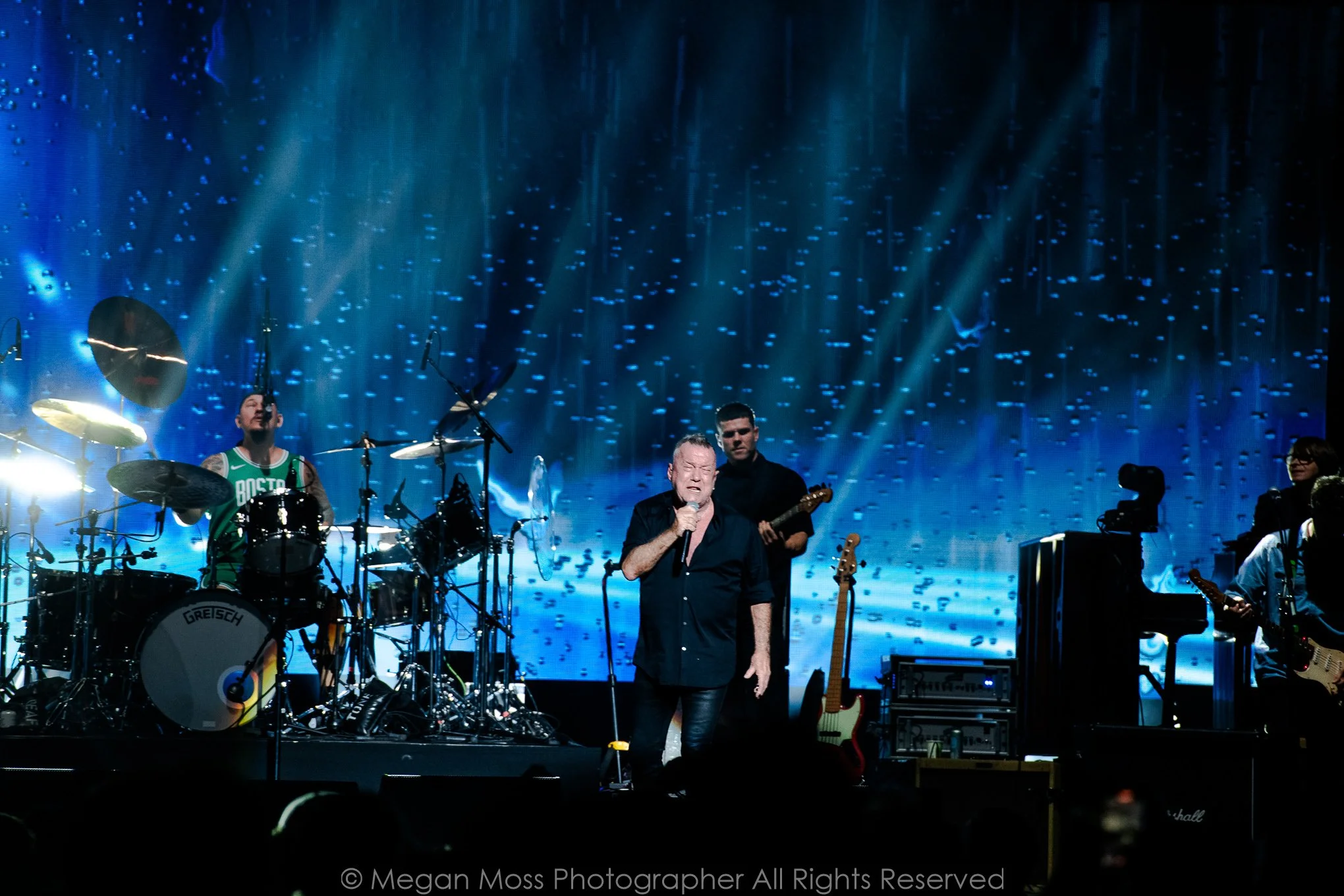
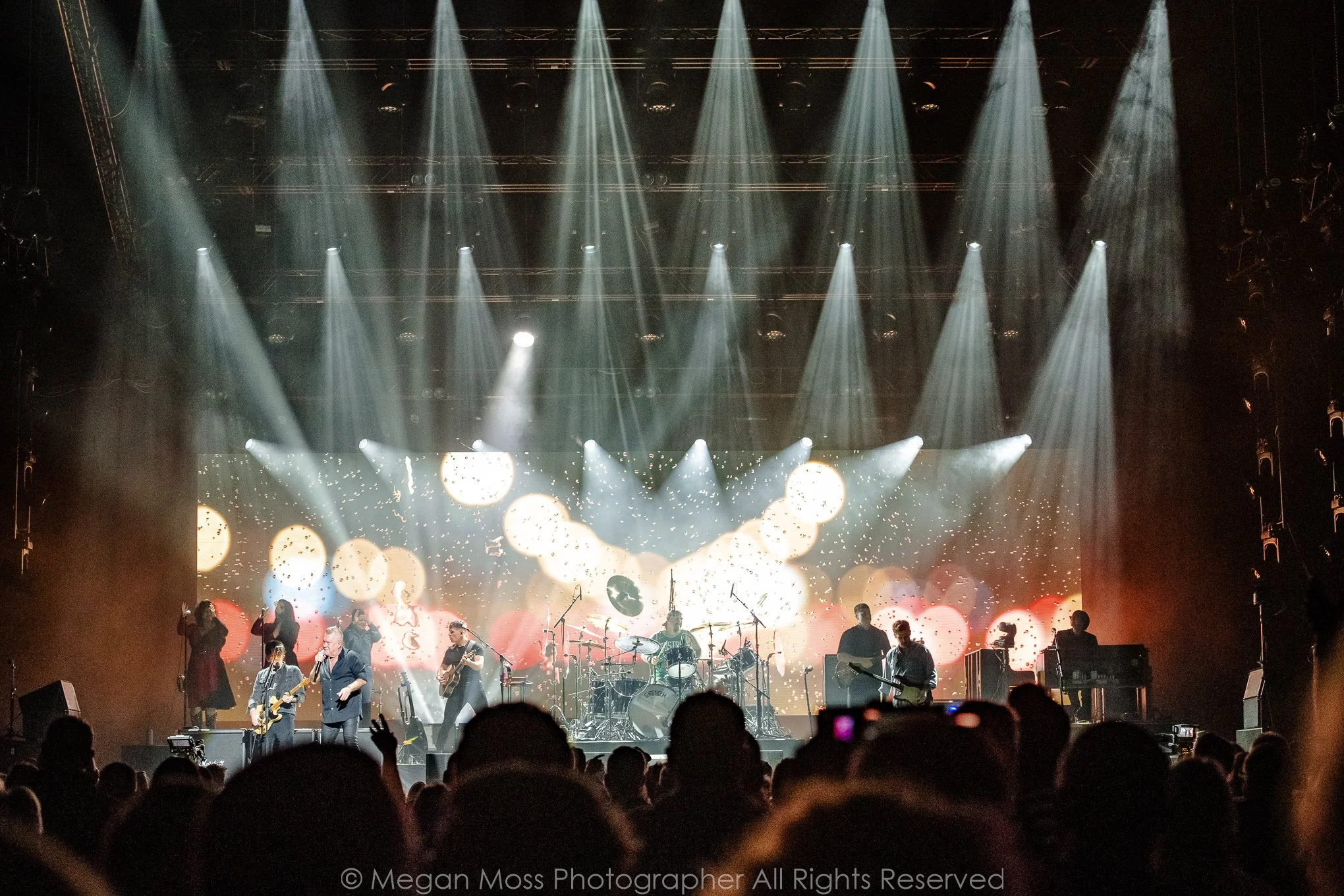
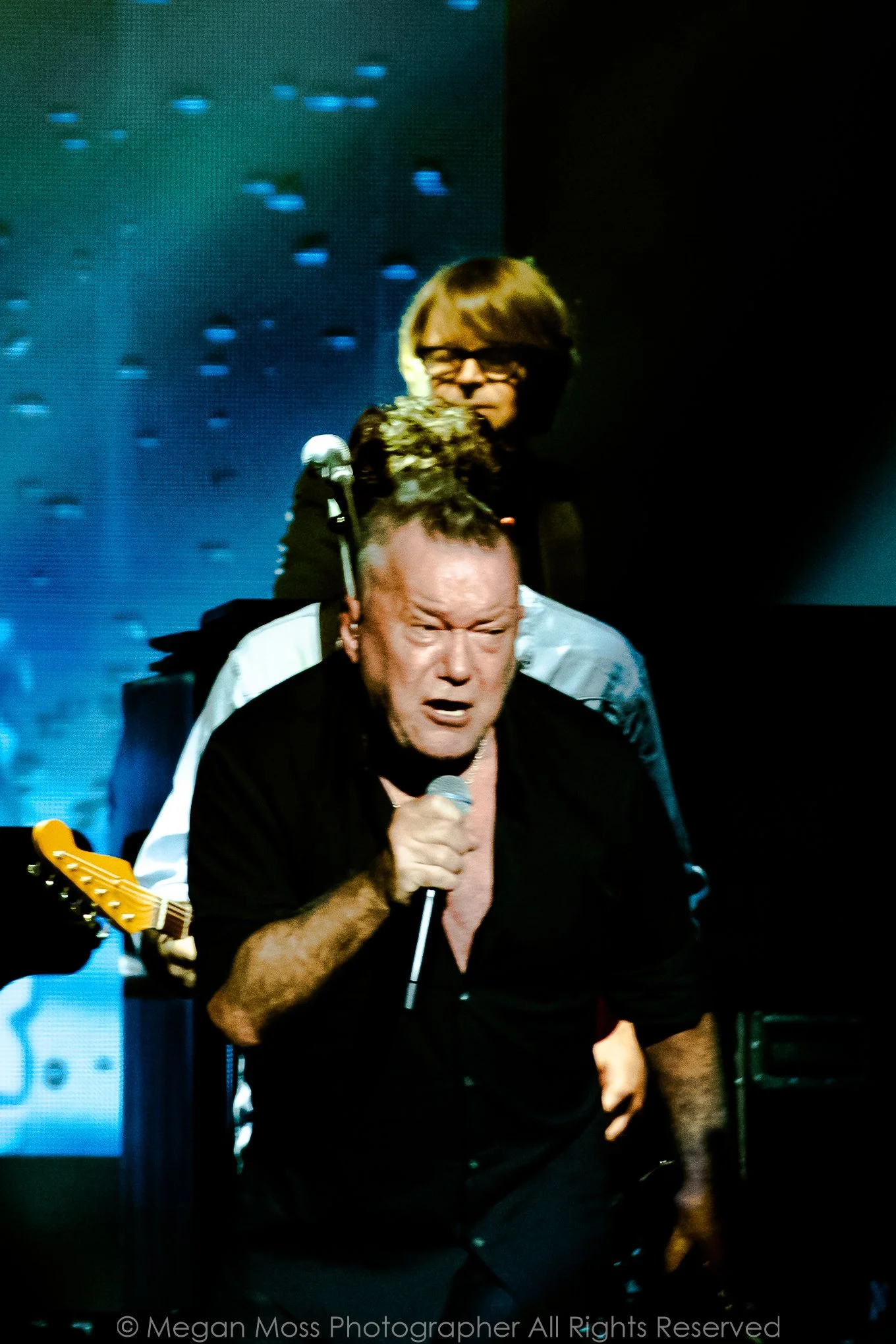
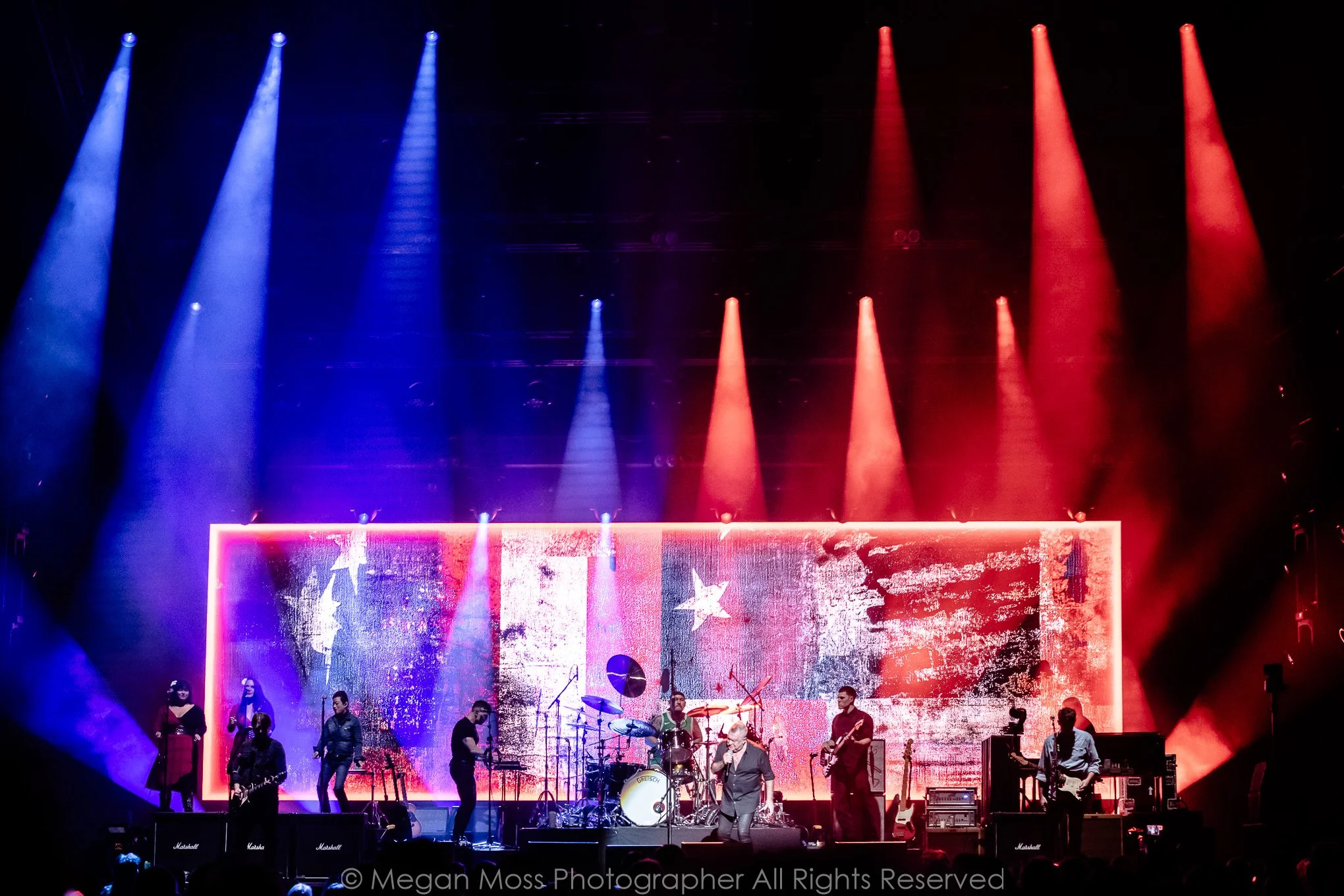
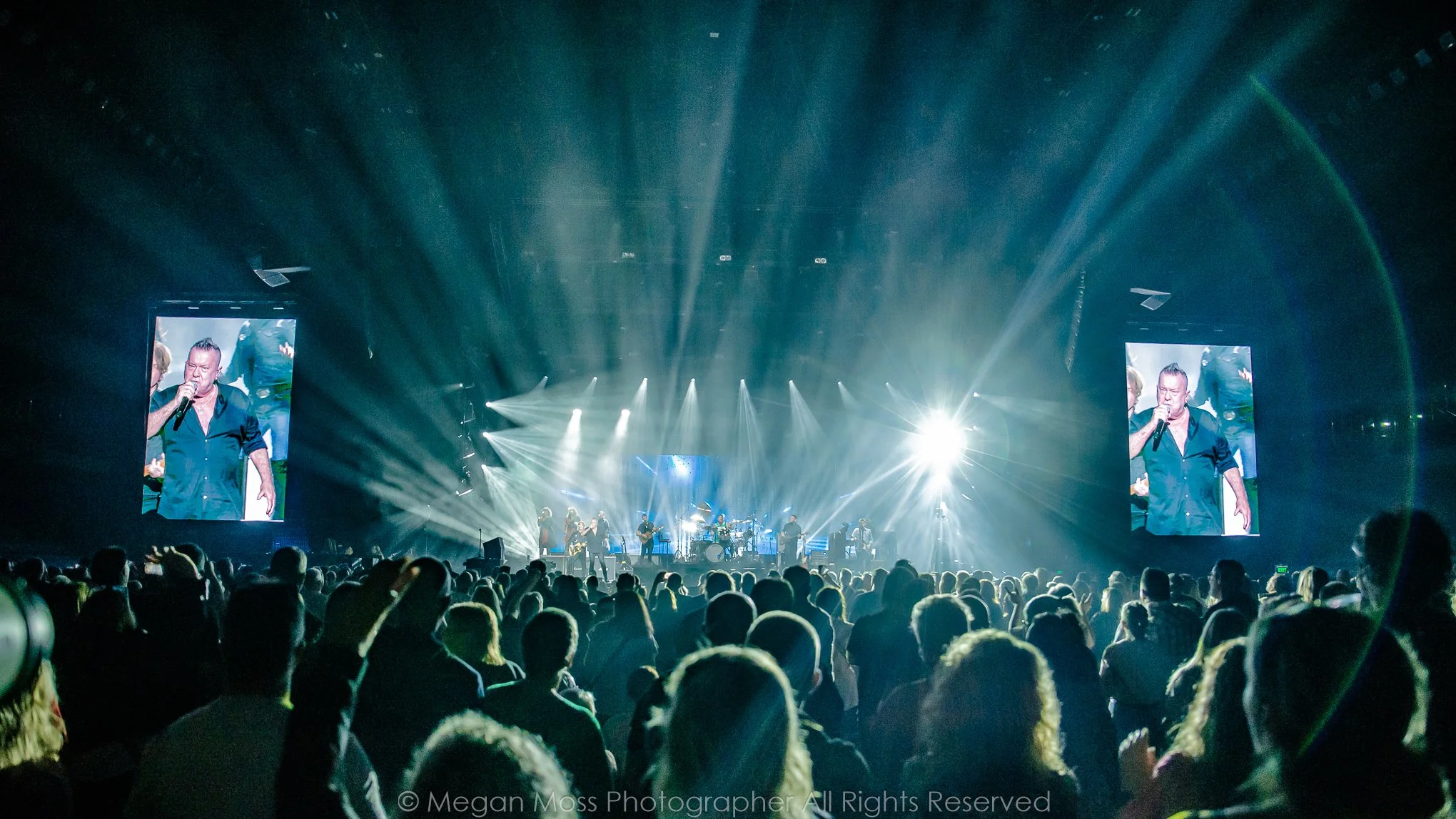
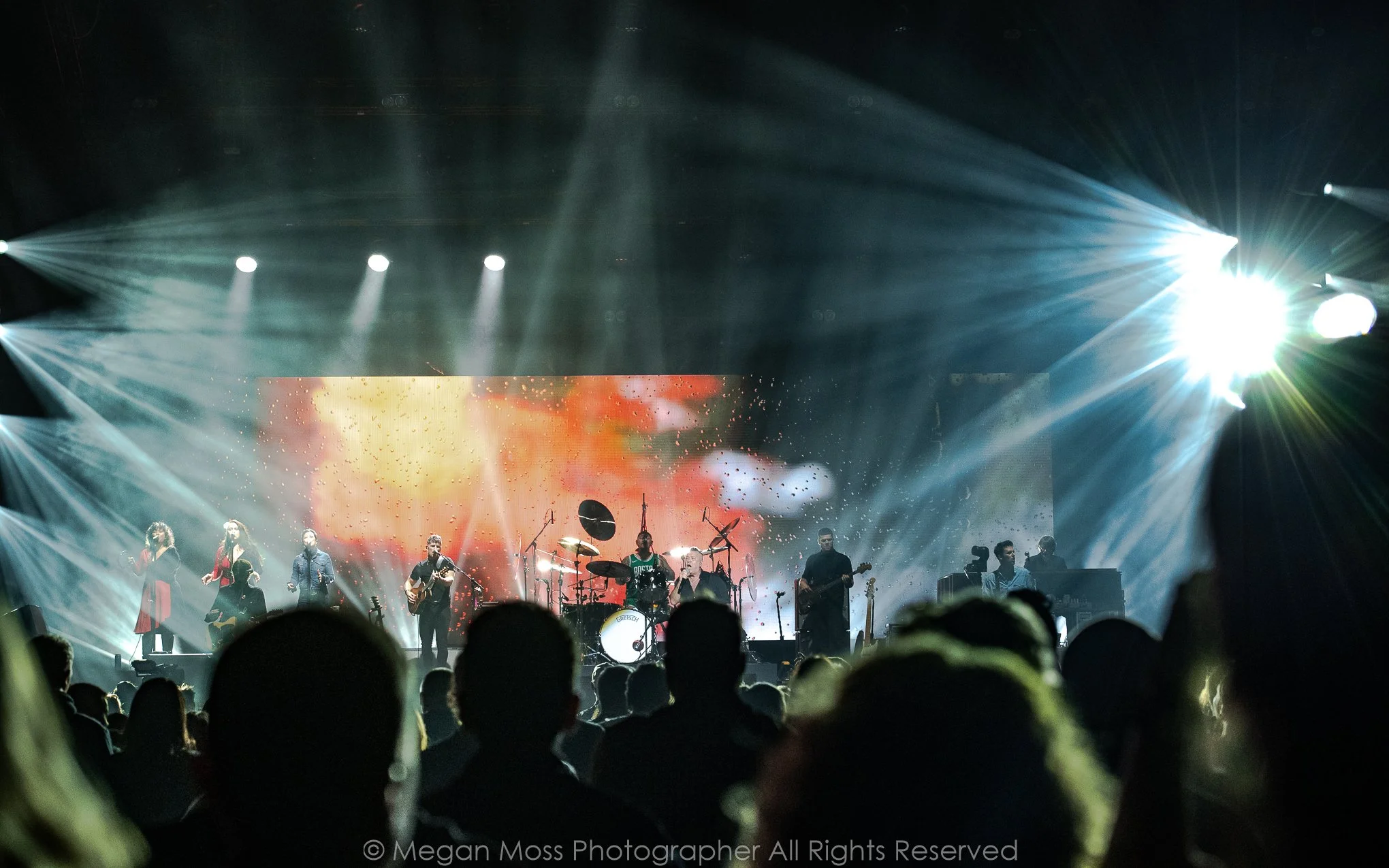
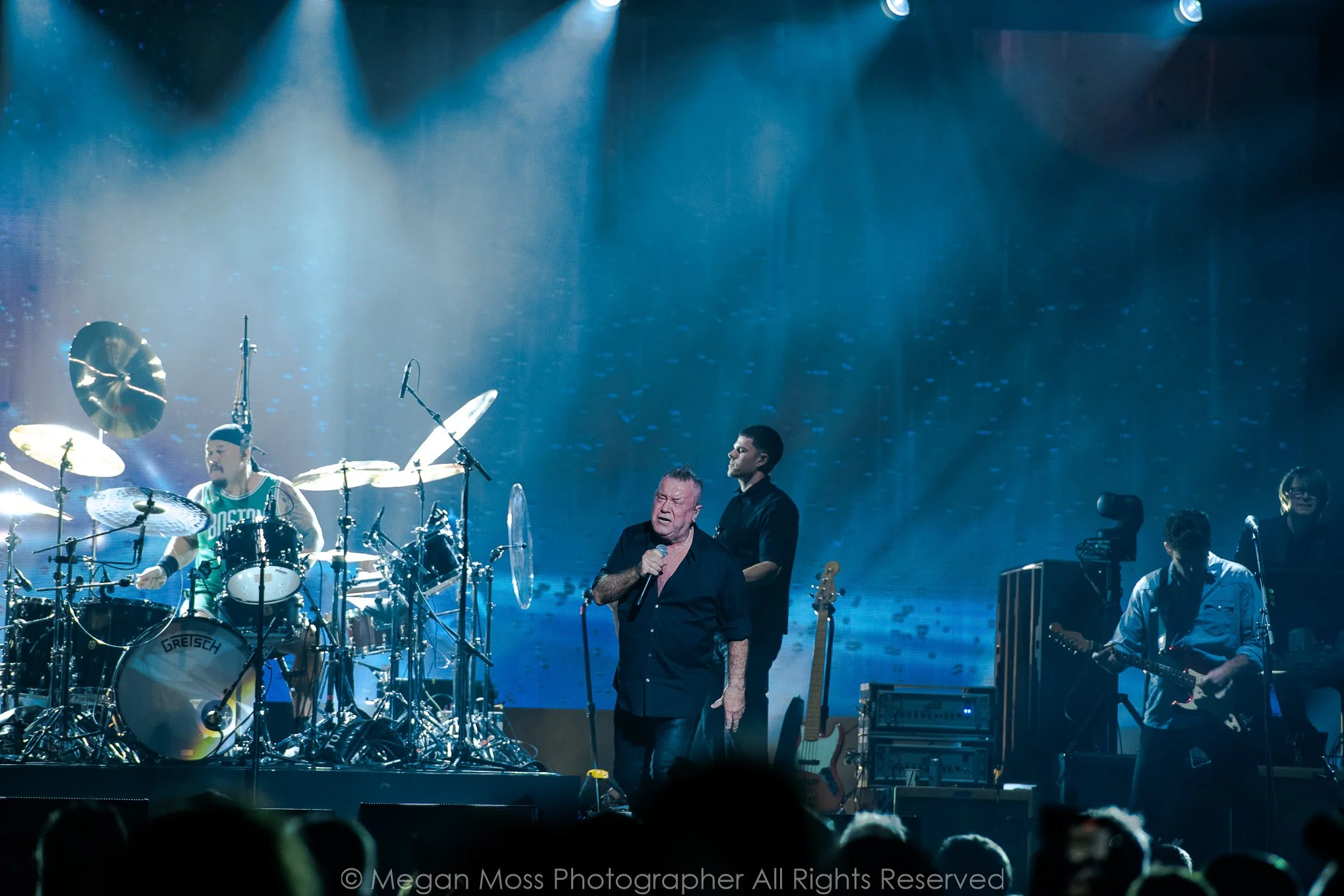
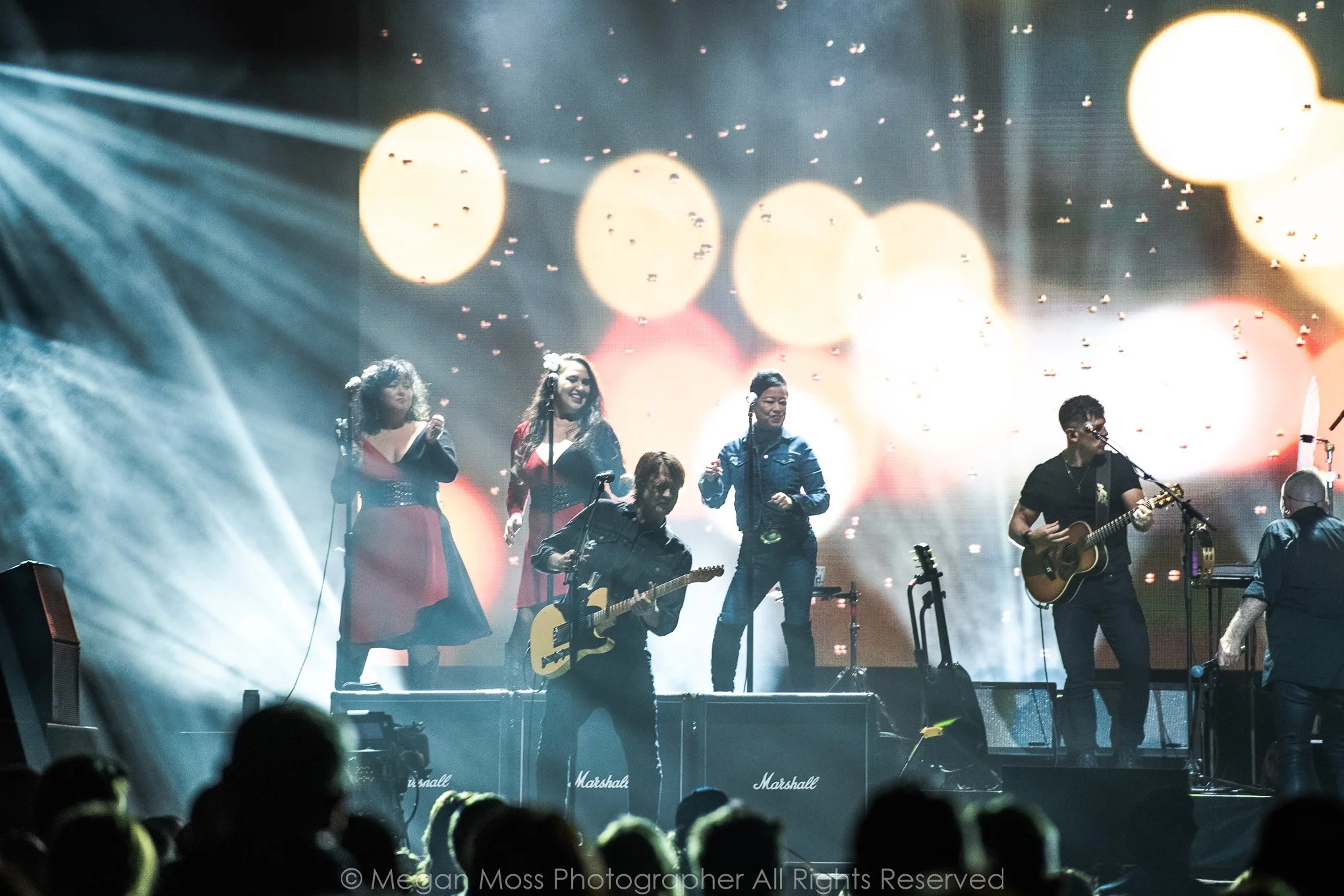
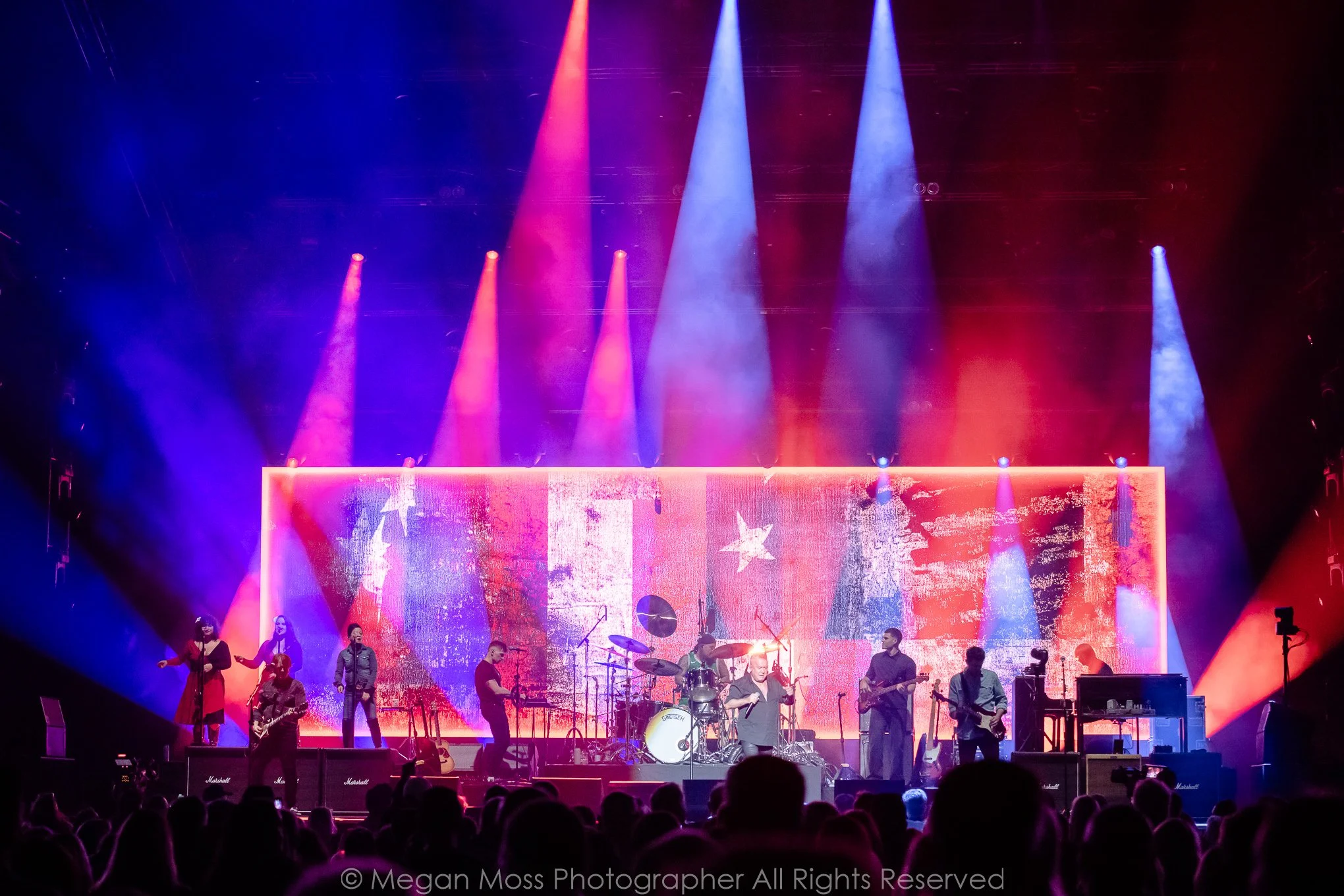
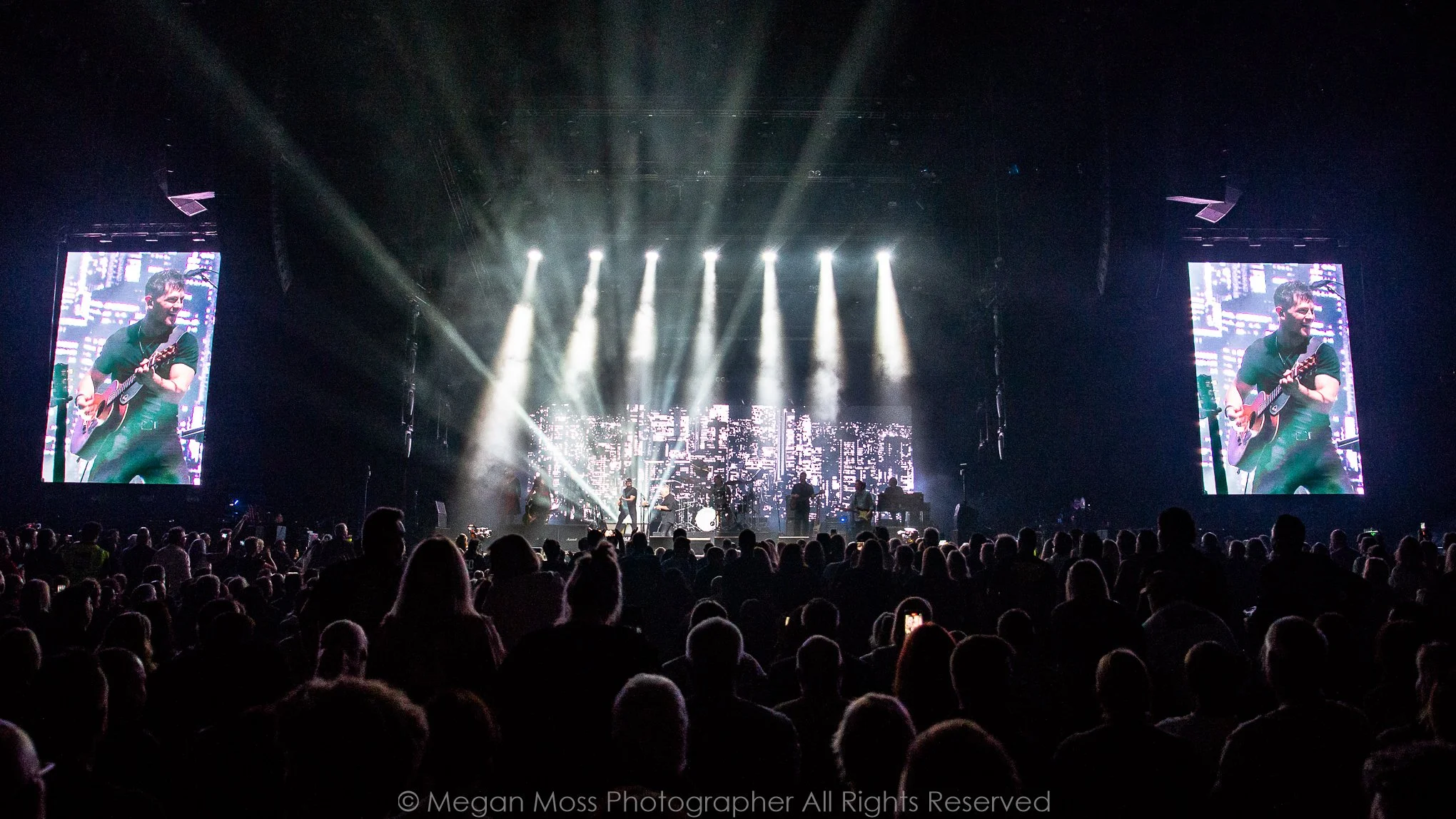
Jimmy Barnes Performs in Auckland Image credit Megan Moss
Review By: Faith Hamblyn & James Brown

Artist/Band: Jimmy Barnes with Ian Moss

Venue/City: Spark Arena, Auckland, New Zealand

Date of Event: Sunday 19th April 2026
Ian Moss - Review by Faith Hamblyn
In a packed Spark Arena tonight, with John Lee Hooker fading out over the PA, Ian Moss strode on to the stage in front of giant red letters spelling out his name. Opening with Such a Beautiful Thing from his debut, 1989’s Matchbook, it suited the theme of tonight of revisiting Australia’s big ‘80s albums. Moss and Jimmy Barnes were complementary vocalists in Cold Chisel, and Moss opened tonight with R&B and blue-eyed soul in contrast to Jimmy’s Barnes-storming.
Such A Beautiful Thing echoes Cold Chisel’s Choirgirl in its imagery, with a young girl caught up in a world she can’t cope with and how living simply is better – it’s a bluesy conceit, and it’s common in reggae too – if we aren’t terrible to each other, the world’s better.
Out of the Fire from Matchbook suited the red lighting, but Cold Chisel’s My Baby bathed in purple light got the crowd singing along. Written by Chisel’s bassist, Phil Small, it’s like a Chuck Berry song – when you can ‘rock and roll’ together, everything else is a cherry on top.
Next up was Nullarbor Plain from Ian Moss’ latest album, Rivers Run Dry. It’s about a Ford Falcon GT 351 ‘Shaker’, in keeping thematically with Moss’ 1996 album Petrolhead. The stage lights were orange searchlights, scanning the crowd like outcasts in the Outback, and pairs of lights turned on and off like headlights for the song’s crescendo.
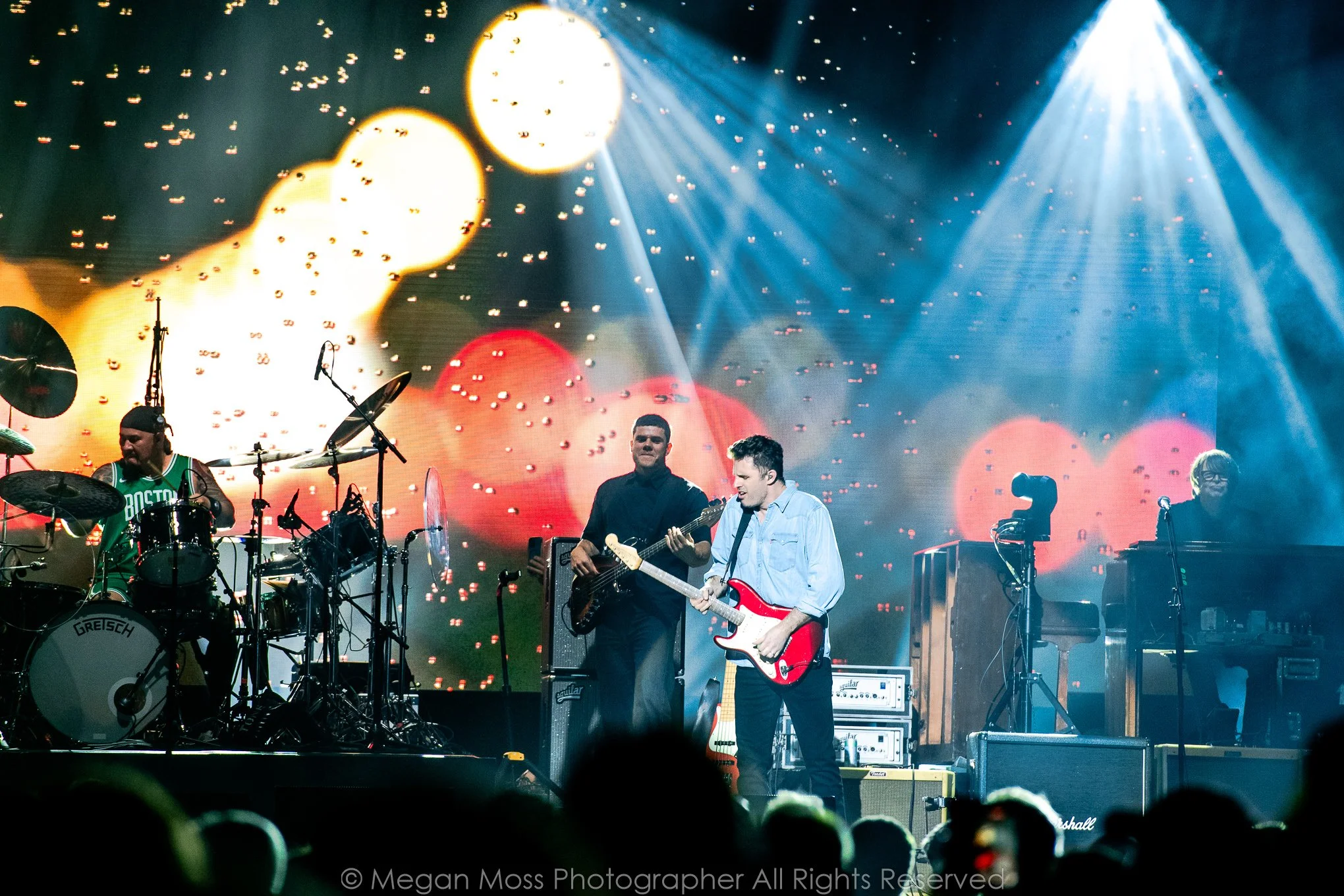
Ian Moss’ version of Cold Chisel’s Choirgirl gives me chills, cos I believe him when he says he’s been trying; it’s a jazzier take, whereas the version on East is fairly pub rock and stoic. The crowd sang the verse, and he expanded his solo on his very shiny red Fender Stratocaster.
I was thinking Moss was looking a bit like Keith Richards – it might be the guitar face he pulls – and the band started intro-ing Telephone Booth with The Rolling Stones’ Start Me Up. Rock! The guitar sounds like a phone line ringing, which is genius, and he had an added yelp to the vocal, stirring in a little vulnerability that the recorded track didn’t have.
Tucker’s Daughter was loungey and funkier than it was when recorded for Matchbook. Legend has it that the voice of reason of the song, the villainous Mr Tucker, was named to rhyme with motherfucker, which cuts through the earnestness – try it out when you sing along next time, heh, heh.
A cover of Georgia On My Mind saw Ian Moss having a ball, with a nod to Ray Charles’ version by guitarist Ollie Thorpe duetting on vocals. Ollie was dressed in a pearl-buttoned cowboy shirt, which was a nice nod to Ray Charles’ country years. Thorpe doubled the guitar line, and the crowd provided full accompaniment, so Moss could maximise the flangey guitar solo.
He described Bow River from Circus Animals as a going-home song, as tonight was the end of this Jimmy Barnes tour. The wild colonial boy of the song is at the end of his wits. What use is money if it can’t buy your youth again; it’s gone in a stream of piss, in a cloud of exhaust. Would guitarist Ollie cover the Jimmy Barnes parts of the song? No, Jimmy Barnes himself just walked on from stage right, along with backing singers. Whoo!
Jimmy Barnes and Ian Moss meet musically with rock and roll and blues in the middle of their respective solo careers in music, and with decades of Cold Chisel together, they are blues brothers. And here comes the blues-shouter now to take over the stage proper.
Ian Moss Setlist
Such a Beautiful Thing
Out of the Fire
My Baby (Cold Chisel song)
Nullarbor Plain
Choirgirl (Cold Chisel song)
Telephone Booth
Tucker's Daughter
Georgia On My Mind
Bow River (Cold Chisel song)
Jimmy Barnes - Review by James Brown
The main show kicked off with a video montage welcoming us to 1985. It was a banner year for Australian music, and of course it saw the release of For The Working Class Man. We were presented with grainy VHS concert footage, TV news snippets, and a slew of personal photos chronicling Jimmy Barnes’ life.
I was under no illusion – having Jimmy Barnes and Ian Moss on the same bill did not make this a Cold Chisel gig. We would eventually get to hear Flame Trees and Khe Sanh, (not to forget Jimmy’s crowd-pleasing surprise cameo on Bow River) which should be enough to satisfy even the most hardcore Chisel fan. But as the main purpose of the night was to mark its 40-year anniversary, the first half of Jimmy’s set would comprise all 12 tracks off For The Working Class Man – although not in the order familiar from the album (or indeed the US reissue simply titled Jimmy Barnes). He mostly went straight from one song into the next, as though with no time to spare in the already generous two-hour show, he didn't want to risk leaving anything out.
There’s something about I'd Die To Be With You Tonight that to me has always sounded like Steven Van Zandt should be singing backing vocals, but as far as I know he had nothing to do with the song. He does have a co-writing credit on Ride the Night Away. I confess that I have had a private little chuckle at the thought of this song having a hilariously different connotation in Ireland (where the verb ‘to ride’ has a very specific colloquial meaning). But actually I suppose the meaning is pretty clear everywhere.
The titular American Heartbeat is represented by a throbbing, insistent drum beat. This could easily work as the main theme to a Rocky movie. Jimmy gave a quick explainer, a defence really, of why he let the label persuade him to include a song ‘about fucking Americans’ on the album. He realised, he said, that it’s a song about all his favourite music – rock and roll, country and western, soul, rockabilly – all born out of that American heartbeat. I think there’s something a little more straightforward. To me, the whole of For The Working Class Man has a distinctly American character. It makes sense. Cold Chisel’s breakup was caused in part by their frustration at failing to break into the American market, so it’s natural that Barnes’ defining solo album would be calculated to appeal to an American sensibility.
It suggests a certain affinity between Australia and the States, for better and for worse, that a work can simultaneously speak for both cultures without compromising its authentic truth. Or maybe there is a statement in there somewhere about the universal plight of the international working class – anywhere in the world, a factory is a factory. Maybe not. I don’t really know shit about Marx.
I want to pause for a moment to address Barnes’ significance as an Australian icon. Despite being born in Glasgow and still retaining a touch of a Scots accent, Barnsey must nevertheless rate at a place in at least the top 10 most Australian men ever (probably top three if you exclude cricketers and blokes who do stuff with crocodiles). His duet of The Best with fellow national treasure Tina Turner was so universally beloved it helped rescue the public perception of rugby league from a dark and messy era for the sport. (Yes, I know Tina wasn’t Australian, but that doesn’t disqualify her as an Aussie icon. Look, some people are born to national treasure status and some have it thrust upon them by association with Mad Max films and league. Don’t get angry at me. I don’t make the rules.) Anyway, moving on.
The mandolin on Thickskinned gives it a bluegrass or Celtic feel. I’m sure I remember it being a banjo on the album, but I could be wrong. Daylight is a pretty intense and moody song, belied by the shoop-shoop peppiness of the backing vocals. In place of Renée Geyer and Vanetta Fields, Jimmy’s backing singers now include his daughter EJ and his wife, Jane.
Jimmy told us he wrote Promise Me You'll Call as a future message to his kids – a sort of time capsule. This was underscored by footage from the excellent concert film Cold Chisel: Last Stand, which captured their farewell performance in 1983. The album version of Vision features bagpipes, so of course the live version also needed a piper. Or make that two, because Jane now plays the pipes as well!
No Second Prize maybe doesn’t have a lot of narrative complexity, but it has genuine emotional resonance. The video screen showed an animation of train tracks, and for a moment I thought this was a clever allusion to how the rhythm of the song drives along like a freight train. Then I remembered the music video – sometimes it’s just not that deep.
From the first bars, the piano intro to Working Class Man elicited instant cheers. I don’t know if Journey’s Jonathan Cain was consciously trying to write a Springsteen song, but that’s the basic effect. I can’t be alone in considering it a spiritual and musical sibling to Born in the USA. I think it only helps to prove my point that Jimmy felt compelled to discreetly change ‘wide Midwestern sky’ to ‘wide Australian sky’. Not that it has ever needed that change to work both ways, of course. Hell, it’s already practically Australia’s unofficial national anthem.
With the whole of For the Working Class Man covered, the second half of the set would be a looser mix of Barnes’ other solo hits and some Chisel classics. I expected there would be a break between the sets. I know I would have needed a cup of tea and a lie down. But there was no break to speak of – at least, not longer than the piano intro to Last Frontier. Again, the aim seemed to be to squeeze in as much as possible before we were all sent home satisfied.
Jimmy was joined for Too Much Ain’t Enough Love by his eldest daughter, Mahalia. You might remember seeing her as an adorable toddler in Last Stand. She's definitely not a little Tin Lid any more. Is there a Cockney rhyming slang term for ‘a woman in her 40s who happens to be an amazing soul singer in her own right’?
After Jimmy’s appearance as a ‘surprise’ guest in Ian Moss’s set, it only made sense for Mossy to come back as a guest himself for Merry-Go-Round, off Cold Chisel’s first album, Breakfast At Sweethearts. Cold Chisel were blessed with two great singers, either one of whom would make most other bands jealous. Their voices meshed beautifully together despite – or perhaps because of – the glaring contrast between them – Ian Moss sings as smoothly as liquid caramel; Jimmy Barnes’ voice is a huge throaty roar, as subtle as a sledgehammer wrapped in barbed wire.
Cold Chisel’s songs tended to fall into one of two broad categories: I'll call them ‘bangers’ and ‘thinkers’. The bangers are the high-energy party anthems. They’re old-time rock ‘n’ roll, with feet firmly planted in both blues and soul. My favorites are mostly the thinkers, the songs with more narrative and emotional depth. Don Walker in particular is a master of this kind of songwriting – although every member of Chisel’s classic lineup contributed some outstanding songwriting. It’s one of the things that makes them such an impressive band.
After Merry-Go-Round (certainly a banger) talks about ‘setting fire to the town’, it makes sense to follow it with another Chisel classic from five years later whose lyrics directly reference that line (this one a consummate thinker). Flame Trees exemplifies Don Walker’s ability to write a song dripping with nostalgia and longing. And it was recorded at a painful period when the band were barely on speaking terms. There's such a heartbreaking world-weariness to it, you have to remind yourself that Don Walker was a young man when he wrote it. Its themes are the fragile poignancy of friendship and of longing for a happier time that you can glimpse but not quite reach. Little wonder that four decades worth of water under the bridge should amplify the emotional power of these themes to wrecking-ball force. It was an achingly beautiful emotional highlight of the evening.
Jimmy Barnes and Michael Hutchence’s 1987 hit is the definitive version of Good Times. I actually prefer their other collaboration from the Lost Boys soundtrack, Laying Down the Law, but I doubt that’s ever going to be a very popular opinion. I never did understand why you would want to brag about all the various unattractive women who were going to be at your party, but maybe that's for the Easybeats to explain. Jimmy was joined by daughters EJ and Mahalia, and they rawwwwwked it. Some fleeting shots of Hutchence on the big screen were no doubt intended as a loving tribute, but it felt more like his ghost was popping in to see how Bony Moronie and Short Fat Fannie were doing.
Khe Sanh is naturally one of my favourite Chisel tracks, because it’s a banger and a thinker. Tonight’s rendition felt very different – even cheerful. It’s a song about trauma, so its meaning is obscured by making it celebratory. I understand, though. The song has become too beloved not to be joyful. Or maybe it’s just that Don wasn’t around to remind everyone that PTSD isn’t supposed to be a good time.
Driving Wheels could have been a track off FTWCM. I’ve heard it observed that it’s just a repeat of Working Class Man, but that’s hardly fair. Australia has several TV shows glamorising truck drivers in the Outback, and it’s hard to believe this hasn’t been used as the theme tune for any of them – what a waste. Defiant, off Jimmy’s 2025 album of the same name, proves that he still has it.
Jimmy’s voice is a weapon of mass destruction. I swear they only give him a microphone so the sound techs won’t feel left out. His Scots roots are apt, because if you had to pick an instrument to describe his vocal style the obvious comparison would be the bagpipes. His immense voice wails and rasps in a paradoxical combination that defies logic. I call it beautiful; you are welcome to disagree. But it certainly adds up to one of the most unmistakable sounds in rock history. For him to still be belting it out with undiminished power after more than half a century, his vocal chords must have been built in the same factory that makes the Toyota Corolla. He actually made it look easy.
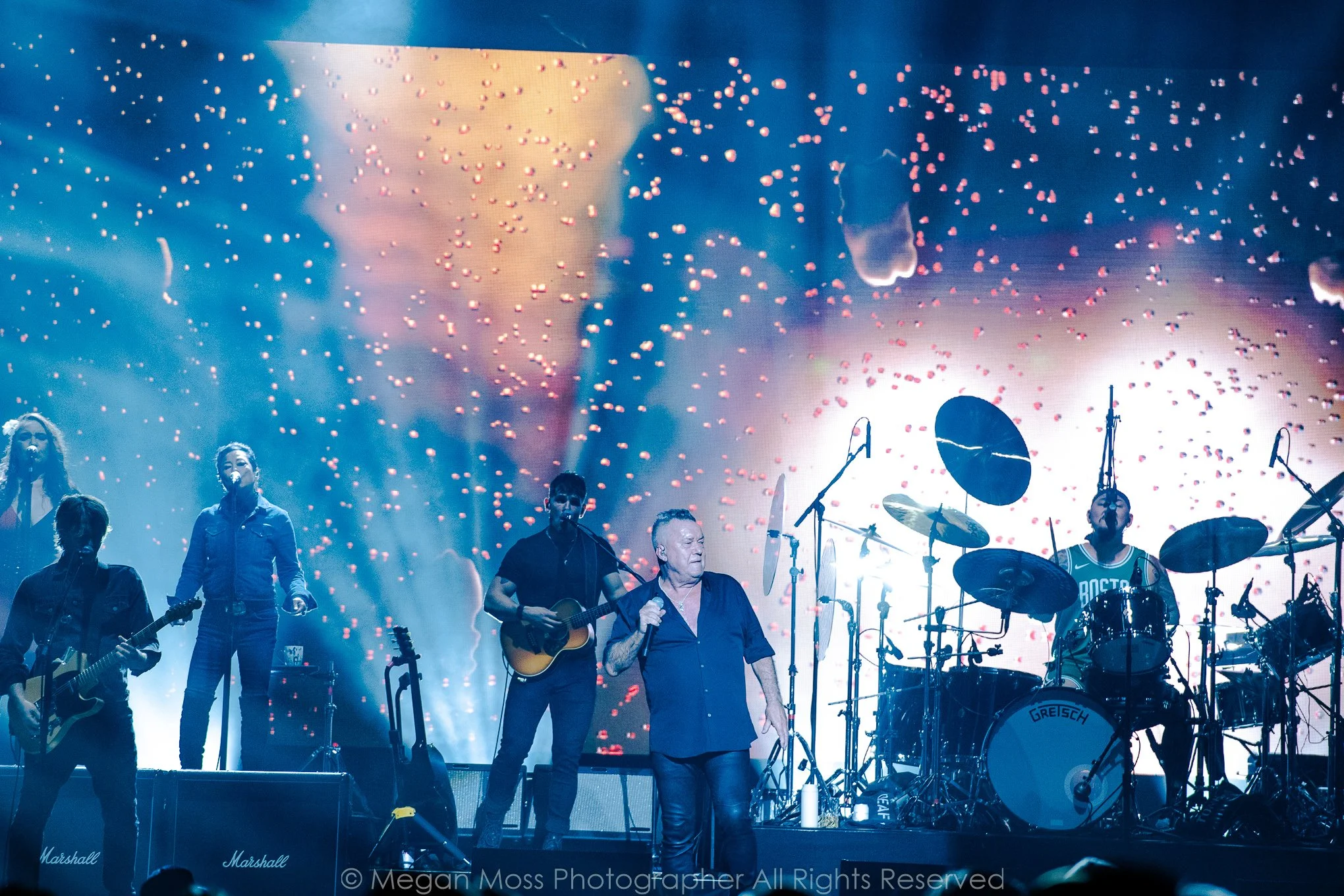
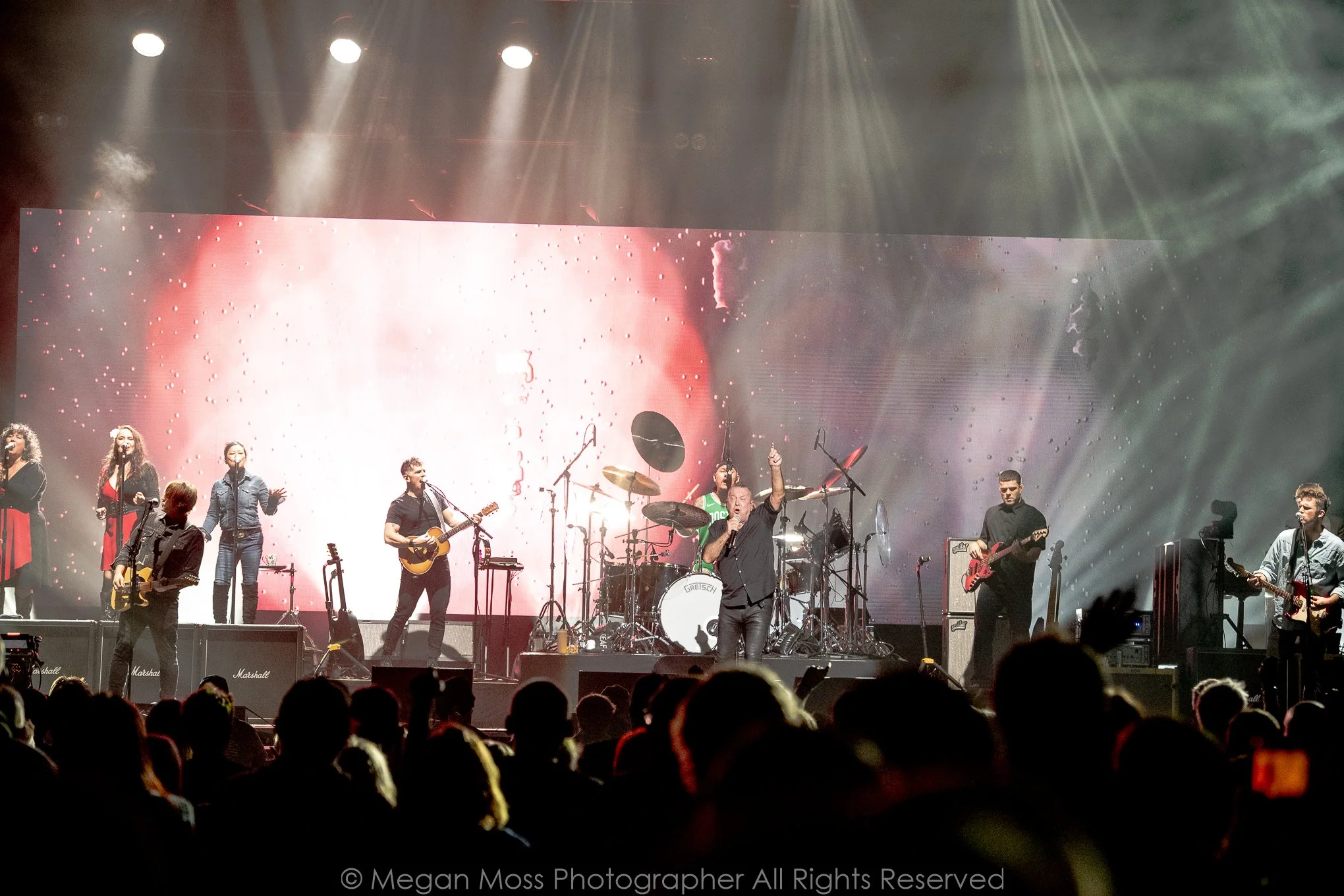
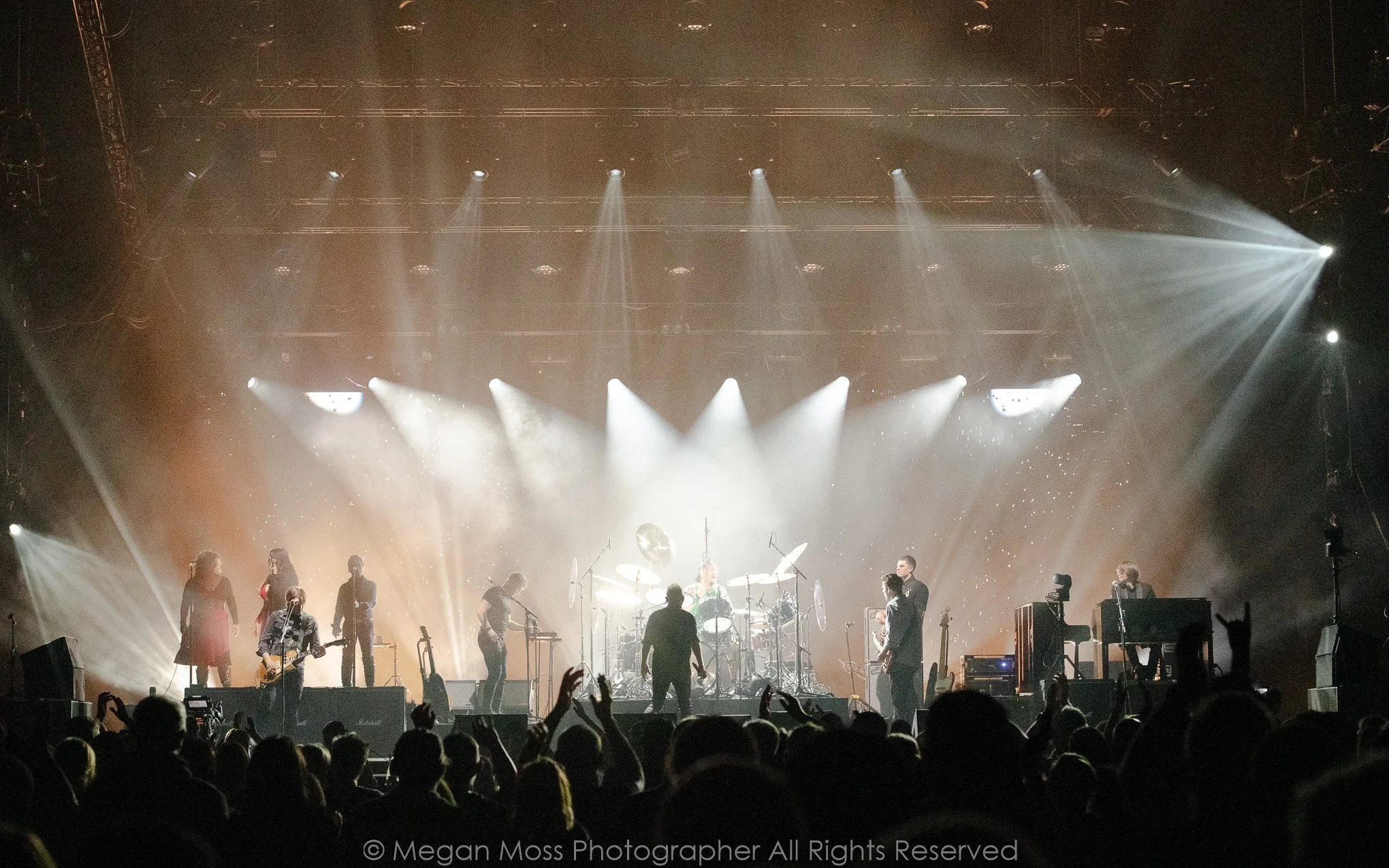
For the final song of the night, and of the tour, Goodbye (Astrid Goodbye) Mossy and his whole band came back to join in the festivities, making for a very crowded stage. There was something delightful about seeing a grandfather still rocking leather pants and a louchely unbuttoned shirt à la Jim Morrison – albeit now proudly showing off a glimpse of his heart surgery scar. Could it be a little embarrassing at almost 70 years of age? I suppose it could, but not for Barnsey. Once a rock star, always a rock star. Watching him share the stage with Mossy again, pausing to share a brief kiss with Jane as she filmed the finale on her phone, while his son Jackie wailed on the drums and his beautiful grown-up daughters sang away angelically, I realised something a little bit profound. There’s actually nothing cool about dying young and romantically. You know what is fucking cool? Living to enjoy the fruits of your success. Jimmy Barnes had a seriously tough start in life, and he’s been through a lot of shit. Now he is bona fide Aussie rock royalty. He has a great family. He and Jane even have a cookbook. He seems incredibly happy, and he bloody deserves it.
Jimmy Barnes Setlist
I'd Die to Be With You Tonight
Ride the Night Away
American Heartbeat
Thick Skinned
Daylight
Promise Me You'll Call
Paradise
Vision
Without Your Love
No Second Prize
Boys Cry Out for War
Working Class Man
Last Frontier
Lay Down Your Guns
Too Much Ain't Enough Love (with Mahalia Barnes)
That's What You Do for Love
Merry-Go-Round (Cold Chisel song) (with Ian Moss)
Flame Trees (Cold Chisel song)
Good Times (The Easybeats cover)
Khe Sanh (Cold Chisel song)
Encore
Driving Wheels
Shutting Down Our Town
Resurrection Shuffle (Ashton, Gardner & Dyke cover)
Defiant
Goodbye (Astrid Goodbye) (Cold Chisel song)
Jimmy Barnes
Ian Moss
Live Photos - Jimmy Barnes - Auckland - 19th April 2026Image Credits to: Megan Moss PhotographerArtist/Band: Jimmy Barnes with Ian MossVenue/City: Spark Arena, Auckland, New ZealandDate of Event: Sunday 19th April 2026Jimmy-Barnes-working Class Man Tour PR 2026